If you are tasked with finding away day ideas after the escape room, decide first whether the day is for connection, a real decision or a thank-you, and default to connection. That one answer picks the format: unstructured time and changing groups for connection, a full morning in the room for a decision, and nothing anyone has to perform for a thank-you. Away days have a bad reputation not because the activities are bad, but because the activity gets chosen first — usually by whoever is most enthusiastic — and the objective is reverse-engineered onto it afterwards. Which is how a team that needed to talk to each other ends up doing an escape room in silence, in threes.
So this is not a list of twenty ideas. It is the question you have to answer before an idea is any use, and then the formats that actually suit each answer.
What is the day actually for?
Almost every away day is one of four things, and they want completely different days. Ten minutes deciding which yours is will save you the entire rest of the planning.
- People who do not know each other need to — New joiners, a merger, three offices who only meet on video. The activity barely matters; what matters is unstructured time and a reason to move around. Long sit-down lunches beat anything competitive.
- The team needs to decide something — A strategy day wearing a fun hat. Be honest about it: this needs a room, a whiteboard, an agenda and a facilitator, and the enjoyable part should be the reward at the end rather than the disguise on the front.
- The team has had a hard year — A thank-you, and it should look like one. Nothing that requires them to perform, compete or be publicly bad at something in front of colleagues.
- Nobody has said, and the date is already booked — Extremely common. Default to the first one — connection is never the wrong objective, and it is the only one that works without buy-in.
The test for any proposed activity: who in your team will find a reason not to come? Every away day has a quiet third who will quietly opt out, and the format usually tells you in advance which third that is. If you can name them, choose something else.
Why most formats lose half the room
Worth knowing before you commit, because the failure is predictable rather than bad luck.
- Anything physically competitive — Excludes anyone with an injury, a fitness gap or a preference not to be seen sweating by their director. That is more of your team than you think.
- Anything requiring performance — Improv, karaoke, presenting something back. Fine for the confident third, quietly unpleasant for the rest.
- Anything in threes for four hours — The escape-room problem. Small fixed groups mean people spend the day with the colleagues they already talk to.
- Anything with a drinks-heavy centre — Excludes more people every year, and increasingly the ones you most want to keep.
The common thread is that these formats all sort people. A good away day format does the opposite: it lets everyone participate at their own level, in changing groups, without anyone having to be visibly good or bad at anything.
The format this venue is built for, and why it works
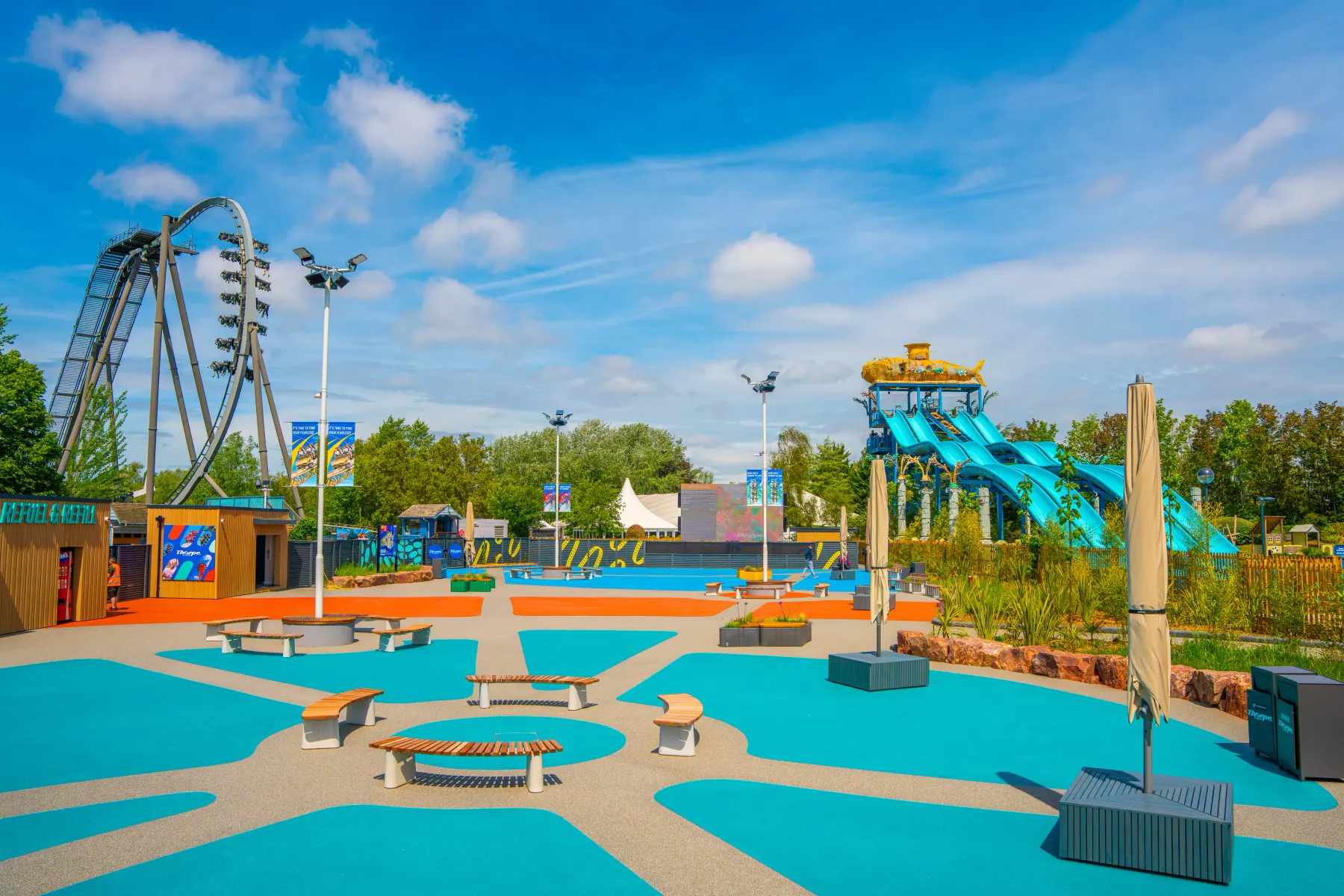
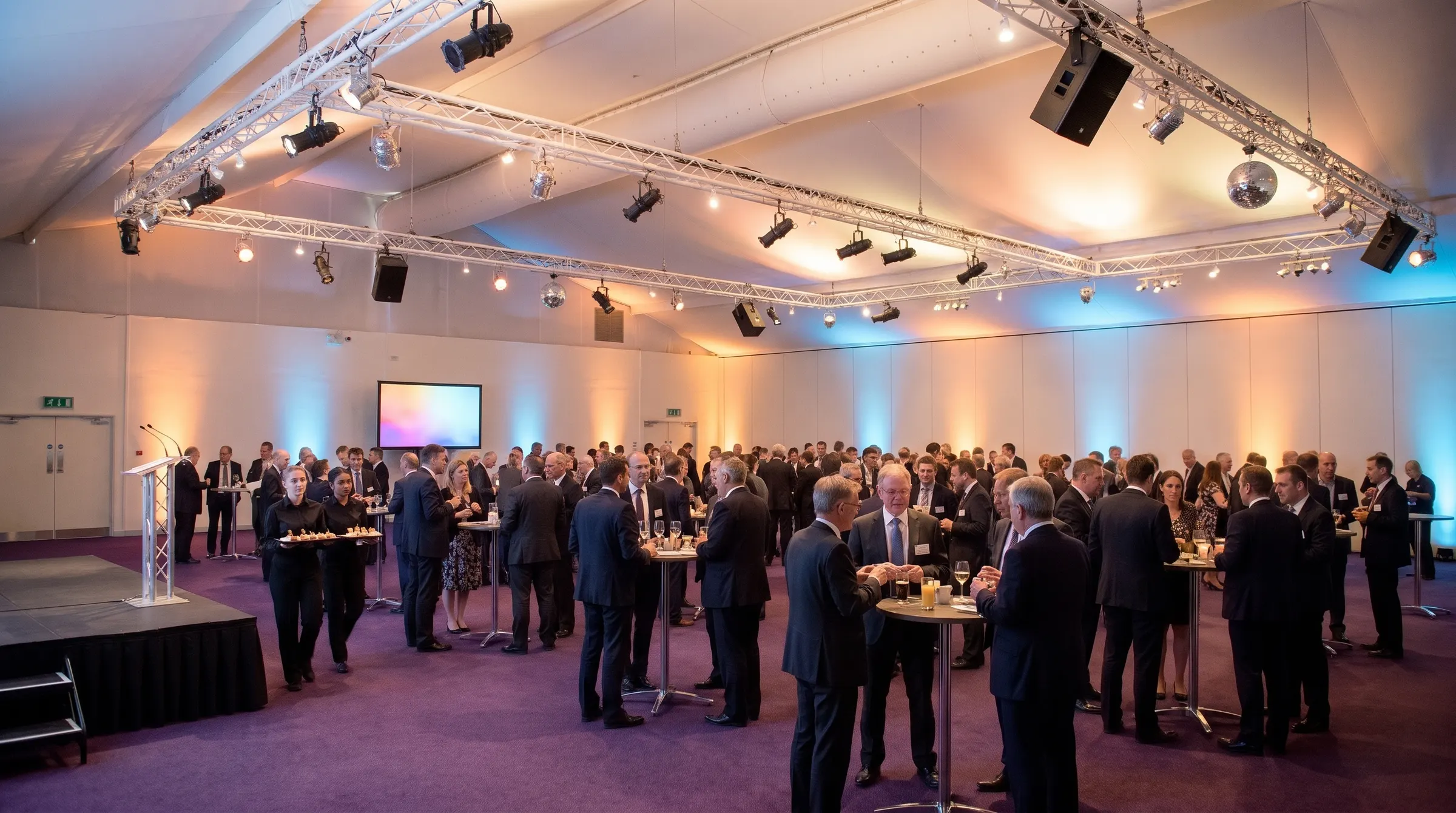
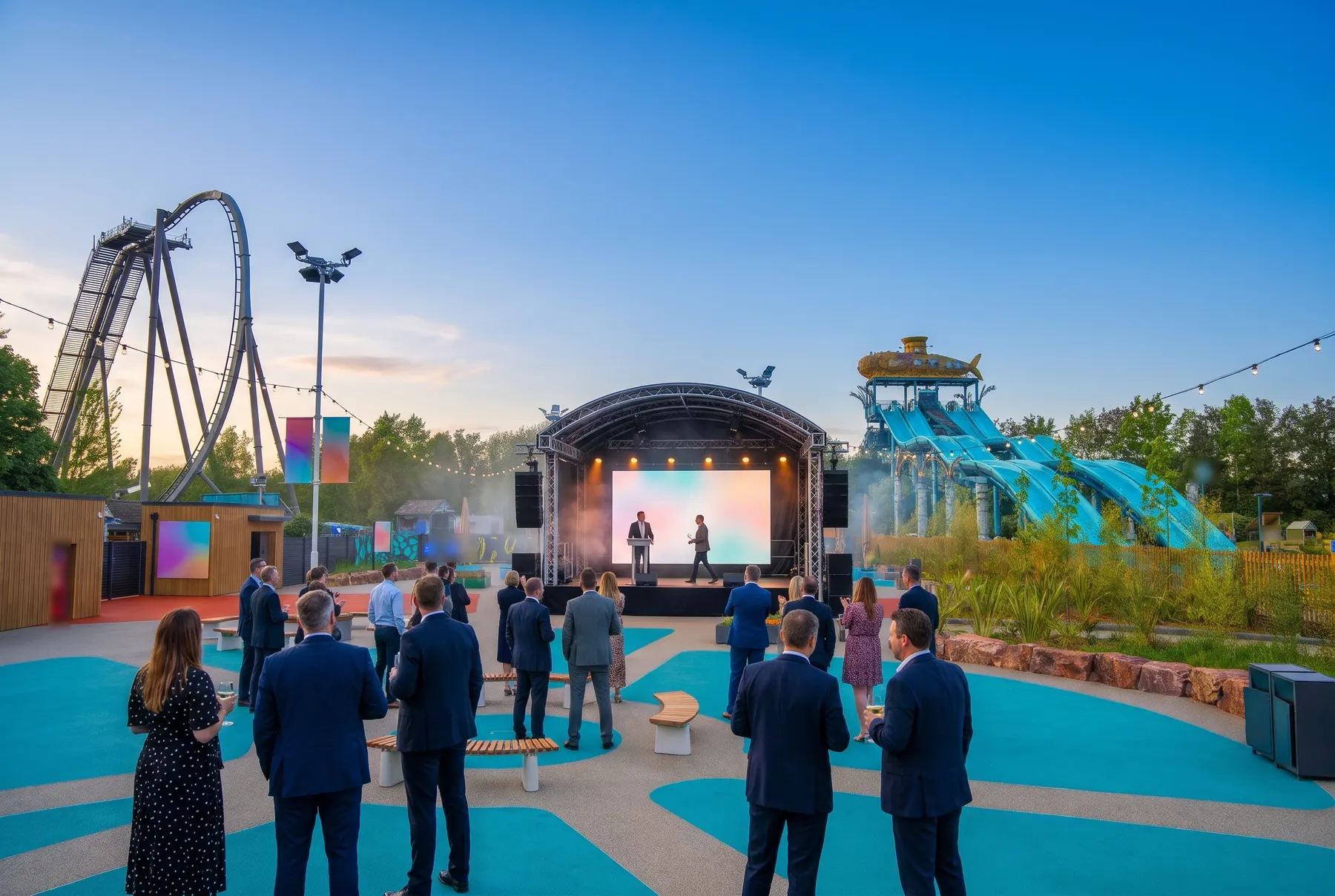
Sessions in the morning, the theme park in the afternoon, dinner in the evening if the day earns it. The morning runs in the Lakeside Hall exactly as our conference room hire does, and the Bronze and Silver day packages include park entry, so on a day the park is open the afternoon needs no tickets arranged. The reason it works is structural rather than novelty.
- The morning does the work — A real room, real AV, an agenda and a facilitator if you want one. The serious half happens while people are fresh, which is also when it is any good.
- The afternoon is not a workshop — It is the theme park around the venue, and it is the only format on this page that nobody opts out of. Nothing to be good at, nothing to perform, no fixed groups.
- Groups re-form constantly — Which is the actual mechanism. People end up in a queue, or not in a queue, with colleagues they would never be seated next to.
- It finishes early on purpose — The day ends on the best part rather than the third session after lunch.
The specific reason this works better than a structured activity: nobody is being assessed. Every team-building format that people dread has an implicit scoreboard. A rollercoaster does not have one, and the conversation in the queue is the whole point. It is the reasoning behind the afternoon at our corporate away day venue.
Four formats, and who each suits
| The day is for | Shape | Watch for |
|---|---|---|
| Connection | Short sessions, long lunch, park all afternoon | Do not over-programme it |
| A real decision | Full morning in the room, park after three | Protect the agenda from the fun |
| A thank-you | Minimal sessions, park, then dinner | Nothing anyone has to perform |
| Two days of the above | Add an evening and somewhere to stay | The second morning is the one that pays off |
The two-day version is underused and it is the one that changes teams: the second morning, with people who ate together the night before, is a different conversation from the first. Overnight stays are available on request: your planner adds rooms in the park's on-site cabins, or nearby hotels, to your quote.
Sizing the day to your headcount
The format above holds at any size, but the room set, the package and the afternoon change with how many are coming. The Lakeside Hall is one open room, 30 m by 25 m, so whatever your headcount, your team has the whole floor.
| Group | Room set | Where to start |
|---|---|---|
| Under 100 | Cabaret tables, so each table is its own working group | Bronze day: eight hours in the Hall, a working lunch, a projector, microphone and sound, and park entry |
| 100 to 300 | Cabaret, up to 300 in the Hall | Silver day, which needs at least 100 guests and adds a welcome breakfast, an upgraded working lunch, up-lighters and moving head lights |
| 300 to 500 | Theatre, up to 500, for the whole group | Silver day, or Gold day with timings and catering built around you; above 300, tables for group work will not all fit at once, so run the discussion in rounds |
Because the Hall does not divide, breakouts happen in the same room: the cabaret tables become the groups, and the screen on the stage wall brings everyone back together. The Terrace, the Hall's outdoor deck at 31 m by 4.6 m, gives people somewhere to step out between sessions; it is an outdoor space, so we confirm its use for your date.
The afternoon scales too. Park entry is in the Bronze and Silver day packages, and exclusive ride time can be added on a day the park is open. For anyone who would rather not ride, chocolate rollercoaster making is an indoor team add-on, and the scavenger hunt is another, with where it runs confirmed for your date. Nobody has to sit the afternoon out.
- Headcount, and whether it might grow — It decides cabaret or theatre, and whether Silver day's 100-guest minimum applies.
- What the day is for — Connection, a real decision or a thank-you. It sets how much of the eight hours goes to sessions.
- Your date — Park entry and ride time apply only on days the park is open, which we confirm for your date.
- Whether anyone stays over — Rooms in the park's on-site cabins, or nearby hotels, go on the same quote on request.
Send those four and your planner replies within one working day with a written quote that sets out every part of the day.
The logistics that decide attendance
The best-designed away day fails if a third of the team cannot easily get there. This is more of the outcome than the agenda is.
- One coach, door to door — A single line on the quote for the whole group, which is usually less than everyone claiming mileage — and the day starts on the vehicle rather than in a car park.
- Car parking in the day packages — Included with Bronze and Silver, which removes the expenses conversation for anyone driving.
- A rail route set out for your date — For anyone coming by train or straight from another meeting, the quote says how.
- Off the M25 at junction 11 — Straight off the motorway, which keeps the journey simple for offices across London and the Thames Valley. Our Surrey venue guide covers how groups get here.
Questions people ask
What makes a good company away day?
Deciding what the day is for before choosing what you will do. Almost every away day is about connection, a real decision, or saying thank you, and those want completely different days. Picking the activity first is why away days have the reputation they have.
What away day activities do people actually enjoy?
The ones with no scoreboard. Anything competitive, anything requiring performance, and anything that puts people in fixed groups of three for four hours will lose the quiet third of your team. Formats where everyone participates at their own level in changing groups do not.
How do you combine a working session with something enjoyable?
Sessions in the morning while people are fresh, then the theme park in the afternoon on a day the park is open, with park entry in the Bronze and Silver day packages. The reason it works is that the enjoyable half is not an activity anyone has to be good at — the conversation in the ride queue is the actual mechanism.
How long should an away day be?
One day works for connection or a thank-you. If the team needs to decide something real, two days with an overnight is materially better, because the second morning with people who ate together is a different conversation. Overnight stays are available on request: your planner adds rooms in the park's on-site cabins, or nearby hotels, to your quote.
How do we make sure everyone actually comes?
Transport, more than the agenda. One coach door to door usually costs less than everyone claiming mileage and starts the day on the vehicle; car parking is included in the Bronze and Silver day packages; and the quote sets out the rail route for your date. Attendance is decided by how easy it is to get there and home.
Give your team a day somewhere different
Tell us the numbers, the date and what the day is for — your planner comes back within one working day with a shape and an itemised quote.