
Team building games for work succeed when they are short, need almost no kit, and reward thinking and talking over speed or confidence. Below are a dozen that pass that test, sorted by how long they take, how many people they suit and how much floor they need.
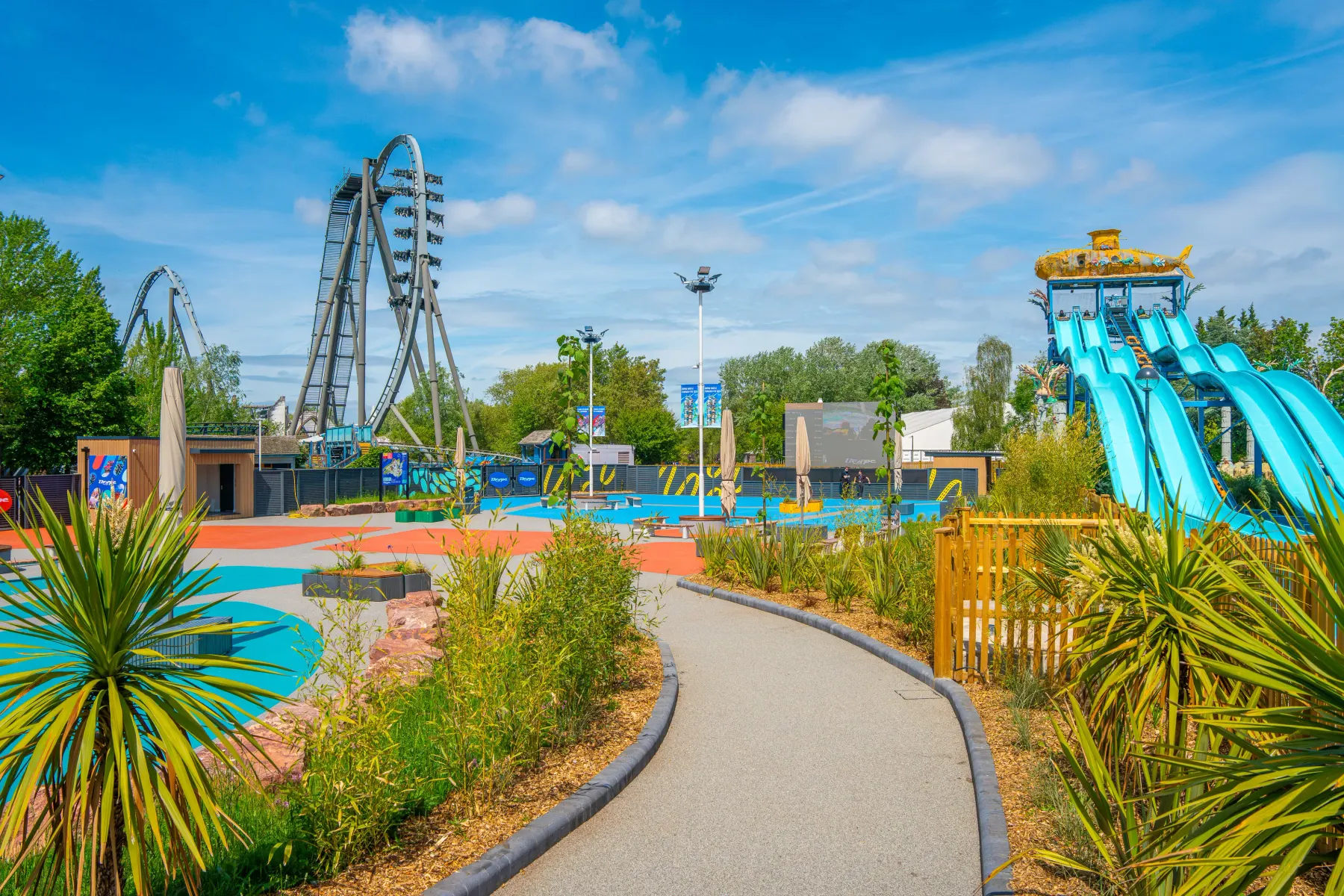
Most can run in a meeting room. A few work better with a stage, a big screen and a room for a whole department, which is where a day at our venue for team days inside Thorpe Park comes in, and where a hosted activity does the job better than any game you could run yourself.
Team building games for work that pass the dread test
Dread has a few predictable causes. Remove them and almost any game becomes one people will play.
- No touching — Human knots and trust falls ask for a physical closeness colleagues have not agreed to. Every game here keeps hands to the table.
- No confessions — Games that ask for a secret or an embarrassing story put the junior people at risk and the senior ones at ease. Keep personal questions light and optional.
- A role for the reluctant — Every team needs a timekeeper, a scorer and a scribe. Offer those roles openly, and the people who would rather not perform still play.
- A clock — A game that ends when the timer goes is a game nobody fears. Keep most of them under twenty minutes.
Quick games for the start of a meeting
Five to ten minutes, any size from four people up, no floor space needed. Use one to open a meeting where people do not know each other well.
- Common ground — Pairs who rarely work together have three minutes to find three things they share that are not about work. Each pair reads out the strangest one.
- Back-to-back drawing — One person describes a simple shape on a card; their partner, facing away, draws it without asking questions. Then swap, and allow questions. The difference makes the point about briefings without anyone saying it.
- One word — Round the table, everyone gives one word for how the last month went. No explanations unless asked. It takes two minutes and tells a manager more than a survey.
- Desert island kit — Teams of four agree the five objects they would take to a desert island, then defend the list in thirty seconds. It is about negotiation, and nobody is wrong.
Longer games for a team session
Thirty to sixty minutes, teams of four to six, a table per team. These carry a lesson and are worth a short debrief afterwards: what worked, who led, what you would do differently.
- The marshmallow challenge — Twenty sticks of dried spaghetti, a metre of tape, a metre of string and one marshmallow, which has to sit on top. Eighteen minutes, the tallest tower standing unaided wins. Teams that test early beat teams that plan for ten minutes and build once.
- Lost at sea — Each person ranks fifteen salvaged items by usefulness on their own, then the team agrees a single ranking. Compare both with an expert list. The team answer usually beats most of the individual ones, which is the lesson.
- Paper bridge — Ten sheets of paper, some tape, and a bridge between two tables that must hold a mug. It rewards the person who sketches first.
- The blind square — Blindfolded, a team of six makes a perfect square from a loop of rope, talking only. It needs a clear patch of floor about four metres across, and it makes a good game to end a session on.
The debrief is the game. Ten minutes on what happened in the team, asked by someone who did not play, turns a bit of fun into something a team can use on Monday. Skip it and you have still had a good hour, but no more than that.
Games for a whole department, on a stage and screen
Once a group passes forty or so, table games splinter. What holds a big room together is something everyone watches and everyone plays: a screen, a host on a stage and teams at tables.
- The company quiz — Rounds on the business, the industry and the people in the room, with answer sheets at each table. A screen the whole room can read is what makes it work.
- Higher or lower — The host shows a number from the business, such as orders last year or miles driven by the sales team, and tables shout higher or lower for the next. It teaches people the numbers without a slide deck.
- Pitch in ten minutes — Mixed teams get a real problem and ten minutes to prepare, then two minutes on stage each. A panel picks the winner, and the best idea is often worth following up.
Our Hall is built for this: one open room of 30 m by 25 m with a removable stage, 24 ft by 12 ft, and a 2.96 m by 2.2 m screen on the same wall. The room has no windows, so the screen reads clearly at any hour, and the day packages bring a projector, mic and sound. The details are on the Lakeside Hall page.
| Game | Group size | Floor needed | Time |
|---|---|---|---|
| Common ground | Any, in pairs | None | 5 minutes |
| Back-to-back drawing | Any, in pairs | Chairs | 10 minutes |
| Marshmallow challenge | Teams of 4 to 6 | A table each | 30 minutes |
| Lost at sea | Teams of 4 to 6 | A table each | 45 minutes |
| Blind square | Teams of 6 | About 4 m across | 20 minutes |
| Company quiz | 40 and up, at tables | Tables and a screen | 45 to 60 minutes |
| Pitch in ten minutes | 20 and up | A stage | 60 minutes |

Running a game so it lands
The same game can be the best twenty minutes of the day or the worst, depending on how it is run. Six habits make the difference.
- Pick the teams yourself — Mix departments, seniority and length of service. Left to choose, people sit with the colleagues they already know, and the game changes nothing.
- Explain it in one minute, then show it — Read the rules once, demonstrate the first move, and put the rules on a card or the screen. Questions get answered team by team once play has started.
- Make the clock visible — A countdown on a screen or a phone propped on each table keeps energy up and stops the game drifting past its slot.
- Adapt before the day, not during it — Check who has a hearing or sight impairment, who cannot stand for long and who joins remotely, and choose or adjust games so they can play fully.
- Finish with a result — Announce a winner, even for a game that was really about the debrief. People like to know how it ended.
- Stop one game early — End while people are still enjoying it. A game that runs until everyone is bored is remembered for the boredom.
When a hosted activity beats a game
Running games yourself has a cost: the organiser spends the session explaining rules and keeping time, and never plays. For a team day, it is worth handing at least part of it to someone else.
- Chocolate rollercoaster making — An indoor team activity on our add-ons list. It is a single line on your quote, and the organiser can join a team.
- A scavenger hunt — Also on the add-ons list, and the one that gets a desk-bound team moving. Where it runs on the day is something we confirm for your date.
- The park — On days the park is open, the Bronze and Silver Day Delegate packages include park entry. No rules, no scoring and no host, which is sometimes exactly what a team needs after a morning of games.
A good team day mixes the two: a quick game to open, a longer one before lunch, then a hosted activity or the park in the afternoon. The day packages give eight hours in the venue with tea and coffee and a working lunch, and they are compared on our packages page. Everything for a team day is on our team days page.
Questions people ask
What are good team building games for work?
Good work games are short, need little kit and reward talking over speed. The marshmallow challenge, back-to-back drawing, Lost at sea and a company quiz all work in an office or at a venue. Avoid games that involve touching, confessions or performing alone, and always give the reluctant a role such as timekeeper.
What are fun team building games for adults?
Adults enjoy games with a real challenge and a clear end. The marshmallow challenge, a pitch round on a stage and a blindfolded rope square all have both. Fun comes from the team solving something together, so pick games where nobody can win alone and nobody is singled out.
What team games can you do in the office?
Most of the best ones fit in a meeting room. Common ground, back-to-back drawing, one word and the marshmallow challenge need only chairs, a table and a few supplies. Save games that need floor space, a stage or a big screen for a day away with the whole team.
What is a quick team game to start a meeting?
Common ground is one of the quickest: pairs who rarely work together find three non-work things they share in three minutes, then read out the strangest. It takes five minutes, needs nothing, and works for any group size. One word round the table is even faster.
What team games work for a big group?
For a big group, use one game everyone watches and plays at once, such as a company quiz on a screen or a pitch round on a stage. Teams sit at tables with answer sheets and a host runs it from the front. Table games tend to splinter once a group passes about forty.
Give your team a day somewhere different
Tell us how many are playing and what the day is for, and the room, the AV and any hosted activity come back on one itemised quote.