
Work through a venue hire checklist in this order: what the hire includes, any minimum spend, capacity, how far ahead to book, then what can grow the quote. Those five decide whether a venue fits your date, your numbers and your budget, and each one is answered below for this venue.
Hiring a venue is an unusually opaque purchase. You are committing a large sum, months ahead, for something you cannot inspect until the day, on terms most venues will not put in writing until you have already invested an afternoon in a phone call. That is not an accident — vagueness protects margin — but it makes the whole category exhausting to shop for.
So these are the questions people actually ask, answered with our own position on each. Where the answer is unflattering to us, it still says so, because a guide that only tells you the good half is the brochure you were trying to escape.
What does venue hire actually include?
The space, for a defined period, and staff to run the building. That is genuinely all it means, and every venue draws the line somewhere different — which is why two hire fees are almost never comparable.
- Included here — Venue hire on its own is the Lakeside Hall, a 30 m by 25 m floor, booked by the hour, with tables and chairs, a projector, house lights, a mic and sound, and Wi-Fi. Our packages add food, and car parking comes with the Bronze and Silver packages.
- Not included, and never pretended to be — Food and drink when you take the room on its own, and anything you add on top: bar hire, entertainment, styling, an extra hour.
- The question that exposes the difference — Ask what time you get in and what time you must be out. A hire that starts at four in the afternoon is a different product from one that starts at nine in the morning, at the same price.
Get-in time is the single most under-asked question in this industry. If you have a supplier setting up — a band, a caterer, a stylist — a late get-in either costs you extra or costs you the setup, and you will discover which four weeks before the event.
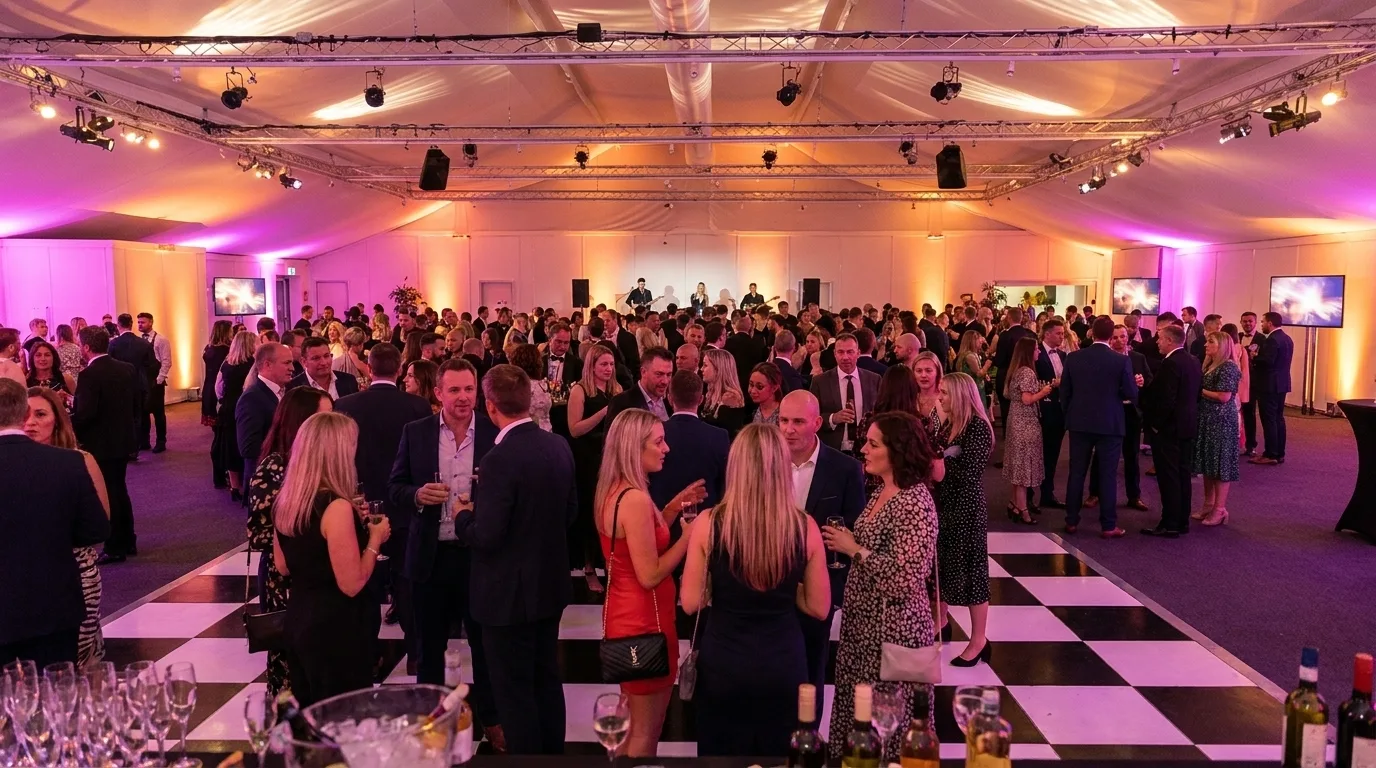
What is a minimum spend, and is it a charge?
It is a floor, not a fee. If everything it covers comes to less than the figure, you pay the figure; if it comes to more, the minimum never appears. Here only one line carries a minimum spend, bar hire, and your quote states it. Elsewhere, ask what it covers and whether the hire counts towards it.
Venues use minimums because a date can only be sold once. A minimum becomes a hidden charge the moment it is not stated up front, which is why ours goes on the quote with the bar hire it belongs to rather than being mentioned at proposal stage.
How much does it cost?
Here it is usually one main number: a package priced per person, with the room, the AV and the food inside it, plus the add-ons you choose. Venue hire on its own is booked by the hour instead. Elsewhere, anyone quoting you a single per-head figure has either bundled the room into it or left it out, so ask which.
| What moves it | What to ask |
|---|---|
| The date | It shapes the quote, so ask for two dates on one quote |
| The package | Which one, and what is inside it |
| Your numbers | Packages are priced per person |
| The add-ons | Bar hire, an extra hour, the dance floor, park lines: each its own line |
The first row of that table is the useful part. If your date can move at all, ask for a second date on the same quote and compare the two written down, before you negotiate anything on the food.
How many people will it hold?
Capacity is per layout, not per room, and the difference between the two figures is bigger than most people expect. A room that seats 500 theatre-style seats far fewer at round tables, because tables need aisles and chairs need pushing back.
| Layout | Capacity |
|---|---|
| Standing | 800 |
| Seated in rows | 500 |
| Banquet | 380 |
| Cabaret | 300 |
Size on the layout your longest session uses rather than your largest. An evening that is a seated dinner for four hours and a dancefloor for two is a banquet booking, and briefing it on the theatre number is how a room ends up too small at eight o'clock.
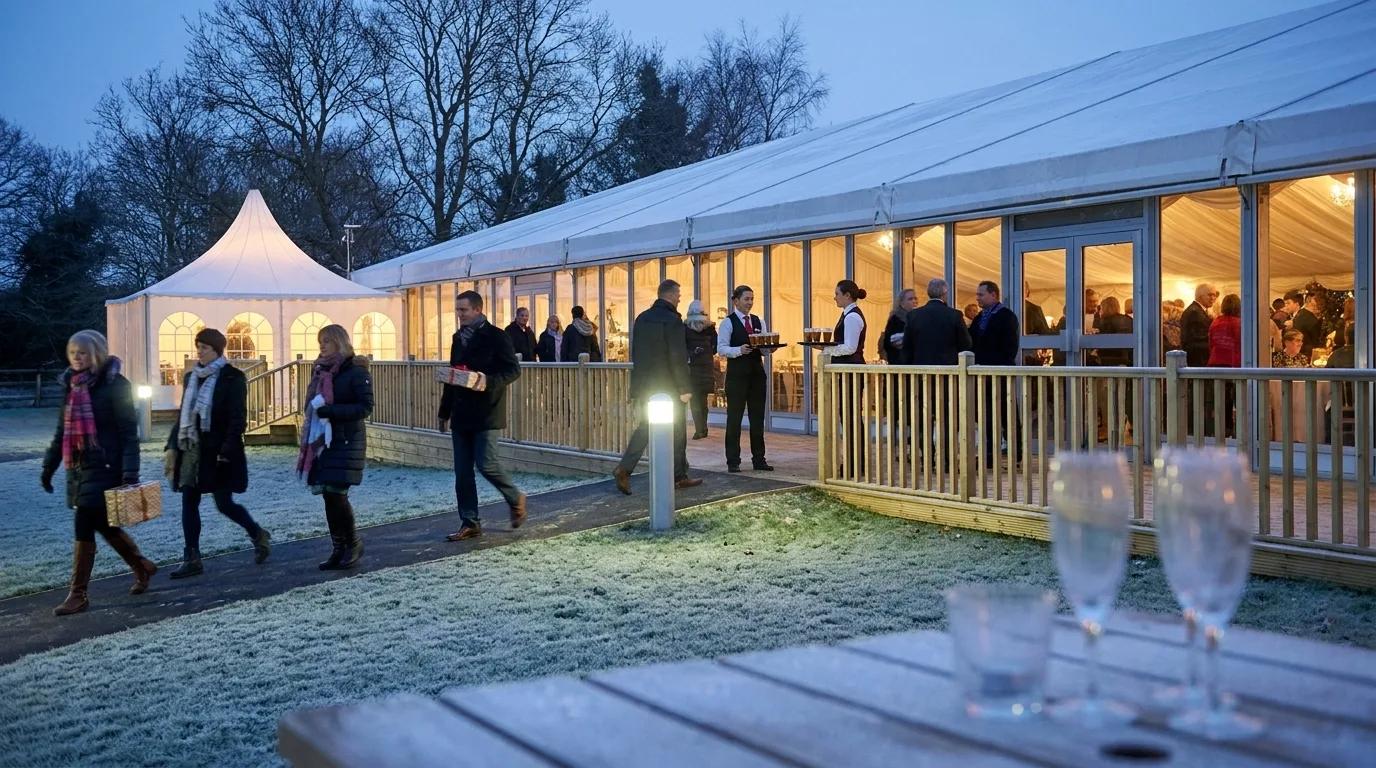
How far ahead should we book?
- Saturdays in December and the summer — As early as you can. These are the dates venues lose first, and everything else is usually more available than the industry implies.
- Midweek, most of the year — Ask for your date; midweek dates are the ones most likely to still be free.
- Anything needing the park — Park entry and Fastrack need a day the park is open, and we confirm it for your date.
The corollary is worth saying because no venue volunteers it: if you are being told a midweek date in March is nearly gone, you are being sold urgency rather than told the truth.
What makes a quote grow after you have accepted it?
Almost always one of five things, in roughly this order of frequency. All five are worth asking about before you sign anything, here included. Ask them through our function rooms and event spaces page.
- Extending the bar or the licence — Agreed on the night, at the worst possible moment, at a rate nobody checked in advance.
- Guest numbers rising after the menu is set — Fine in itself; worth knowing how a per-person package moves when the final count changes.
- AV that turned out not to be included — The most common exclusion in the industry and the most expensive to add late.
- Service charge and VAT — Two lines that can move a total by a fifth between the brochure figure and the invoice.
- Get-in and get-out either side of the day — Especially with external suppliers, and especially when the previous booking overran.
What is here that is not at a hotel?
A theme park around it, and it is the only answer to this question that is not a matter of taste. Everything else a venue offers, a good room, a kitchen, a bar, exists elsewhere. Rides do not.
- Park entry, in the day packages — Part of Bronze and Silver day, on days the park is open, on the same quote as the room.
- Exclusive ride time — One coaster, one train, for your group alone, by the hour, on days the park is open; we confirm the time for your date.
- Fastrack — Five levels of queue-jump, where the group has park entry.
Questions people ask
What is included in venue hire?
On its own, the room is the Lakeside Hall, booked by the hour, with tables and chairs, a projector, house lights, a mic and sound, and Wi-Fi. Food and drink come with our packages instead, which are priced per person. Ask any venue what time you get in and what time you are out — a hire starting at four in the afternoon is a different product from one starting at nine.
Is a minimum spend an extra charge?
No, it is a floor. If what it covers lands below it you pay the floor; if above, you never see the number. Here the only minimum spend is on bar hire, and your quote states it. Elsewhere, ask whether the hire counts towards a minimum, because where it does not, the figure is a larger commitment.
How much does it cost to hire a venue?
Here, a package priced per person with the room, the AV and the food inside it, or the room on its own, booked by the hour, plus the add-ons you choose. Your date, numbers and choices shape it, and your written quote sets out every line within one working day.
How many guests can you hold?
The Lakeside Hall holds 800 standing, 500 seated in rows, 380 for a seated dinner and 300 at cabaret. Capacity is per layout rather than per room, so size the booking on the layout your longest session uses rather than your largest.
How far in advance should we book?
As early as you can for a Saturday in December or high summer, the dates venues lose first. Midweek dates are more likely to still be free. Park entry and Fastrack need a day the park is open, and we confirm it for your date.
See if Thrillwater is the right room for your date
Tell us the date, the numbers and roughly what the day looks like — your planner comes back within one working day with everything itemised.